Table of Contents (14 sections)
In the ever-evolving world of science, progressing in your career requires more than just knowledge; it demands a specific skill set tailored to overcome challenges and seize opportunities. By honing these essential skills, you can navigate your scientific career effectively, contribute to groundbreaking research, and maintain a fulfilling professional life. Let's dive into these skills to succeed as a scientist!
1. Critical Thinking and Problem Solving
Critical thinking is the backbone of scientific inquiry. As a scientist, you will encounter complex problems that require not just knowledge, but also the ability to analyze data and assess different solutions critically. According to a report from the National Science Foundation, critical thinking is not only essential for scientific research but is also a sought-after skill in many professions today. For example, when interpreting experimental results, scientists must evaluate inconsistencies and draw appropriate conclusions. By developing critical thinking skills, you're better equipped to generate hypotheses, design experiments, and propose solutions based on your findings.
2. Strong Communication Skills
Effective communication skills are crucial for sharing your research findings, whether through writing or verbal presentations. According to a study published in the Journal of Science Communication, conveying scientific information in an accessible manner enhances understanding both within the scientific community and with the public. Successful scientists must write reports, publish articles, and present their work at conferences. Practicing these skills will not only improve your ability to inform others but also enhance collaboration with colleagues. Consider joining professional organizations or participating in workshops that focus on scientific communication to sharpen your skills.
3. Team Collaboration
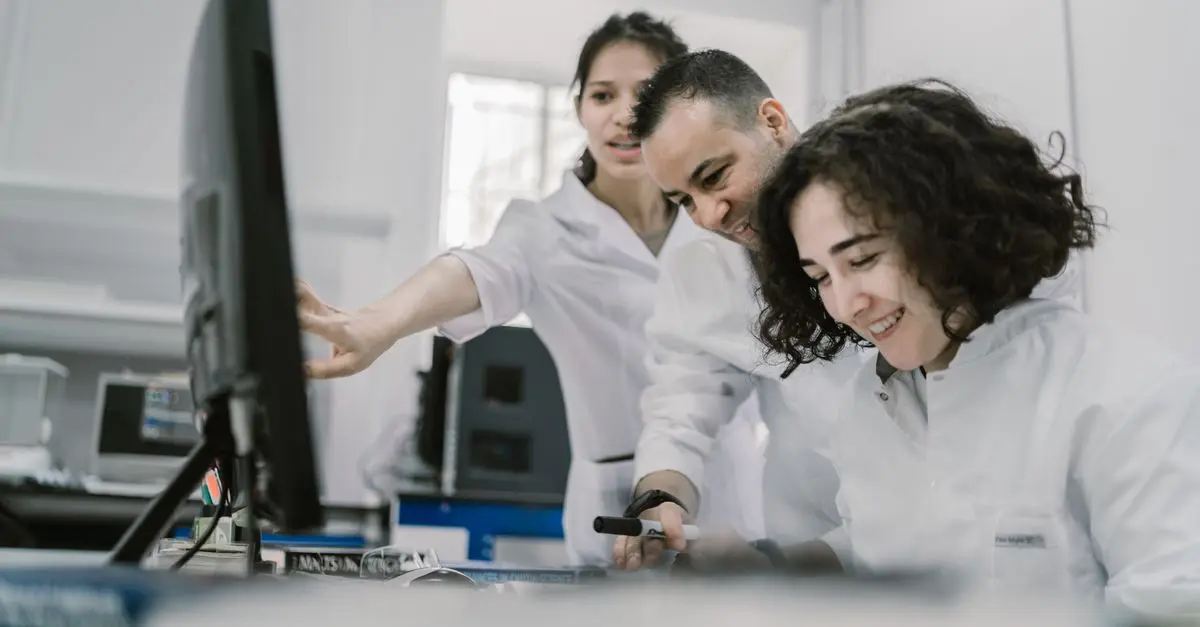
Modern science is often a collaborative endeavor. From joint research projects to interdisciplinary studies, the ability to work effectively in teams is vital. A survey by Elsevier highlighted that over 80% of researchers believe teamwork significantly contributes to the success of scientific projects. Working alongside others with different expertise allows for a blending of ideas and approaches, which can lead to innovative solutions. Engage with colleagues frequently and participate in group projects to improve your teamwork skills. Seek feedback after collaborative efforts; this can provide insights to improve future interactions.
4. Time Management and Organization
Scientific projects often come with tight deadlines and complexities that require efficient time management. A study published in Research Management Review indicates that scientists who practice effective time management report lower stress levels and higher productivity. This means setting clear priorities, creating timelines for your projects, and using tools like project management software can significantly enhance your efficiency. Keeping a detailed lab notebook and maintaining organized data records can also streamline your workflow and help you track progress systematically.
5. Adaptability and Continuous Learning
The scientific landscape is constantly changing, with new technologies and discoveries emerging daily. According to a report from World Economic Forum, adaptability is one of the top ten skills needed by 2025, reflecting the fast pace of change in various industries, including science. Thus, a successful scientist must stay updated with the latest trends and be open to learning new methods or techniques. Attending workshops, enrolling in online courses, or engaging with professional communities can foster continuous learning and adaptability. Embrace changes as opportunities for growth rather than obstacles.
6. Analytical and Statistical Skills
A strong foundation in analytical skills and statistics is essential for a scientist, as these disciplines allow you to interpret data comprehensively. A study featured in Nature highlighted the importance of statistical literacy in designing experiments and analyzing outcomes. As a scientist, you will often be tasked with collecting data, running statistical tests, and drawing inferences from numerical information. Strengthening your knowledge of statistical software and data analysis can provide you with tools to validate your research results effectively.
7. Ethical Considerations and Integrity
As the scientific community is held to high ethical standards, it's vital to develop a strong sense of integrity. The American Psychological Association emphasizes the importance of ethics in research, particularly when it comes to the treatment of subjects and honesty in reporting results. Understanding ethical guidelines and adhering to them will not only help you build credibility with your peers but also ensure the progress of science maintains public trust. Engage in training related to research ethics and apply these principles consistently in your work.
8. Resilience and Perseverance
Science is not without its failures and setbacks. Developing resilience to deal with rejection, failed experiments, or unexpected results is critical. According to a study by Harvard Business Review, those who demonstrate perseverance often encounter more significant success. Cultivating a mindset that views challenges as opportunities to learn and grow can keep you motivated. Keep journal entries reflecting on your experiences; this reflection can help you identify your progress and maintain perspective.
9. Networking and Relationship-Building
Building relationships within the scientific community can lead to collaboration and career opportunities. A publication by Science Careers shows that 70% of jobs are not publicly advertised, highlighting the importance of networking in finding career advancements. Attend scientific conferences, engage on professional platforms like LinkedIn, and don’t hesitate to reach out to fellow scientists. The connections you foster today may open doors for collaboration tomorrow.
10. Technical Proficiency
Depending on your field of study, having proficiency in specific tools and technologies can significantly enhance your research capabilities. Learning to use lab equipment, software for simulations, or research databases can put you ahead in your field. According to data from Pew Research, familiarity with emerging technologies is becoming increasingly embedded in scientific research practices. Continuously upgrade your technical skills through formal education or self-learning opportunities. Remember to stay curious!
📺 For further exploration:
Check out [Essential Skills for Scientists], a comprehensive overview of crucial skills and tips for budding scientists. Search on YouTube: "essential skills to succeed as a scientist 2026".
Checklist of Essential Skills
- [ ] Develop critical thinking skills
- [ ] Enhance communication abilities
- [ ] Improve teamwork and collaboration
- [ ] Implement effective time management
- [ ] Stay adaptable and committed to learning
- [ ] Strengthen analytical and statistical expertise
- [ ] Adhere to ethical standards and integrity
- [ ] Cultivate resilience and perseverance
- [ ] Network effectively within the scientific community
- [ ] Acquire technical proficiency relevant to your field
Glossary
| Terme | Définition |
|---|---|
| Critical Thinking | The objective analysis of facts to form a judgment. |
| Collaboration | Working jointly with others in a scientific endeavor. |
| Ethics | Moral principles that govern a person's behavior. |
---
📺 Pour aller plus loin : essential skills to succeed as a scientist 2026 sur YouTube