Table of Contents (10 sections)
Innovations in Scientific Research
Innovations in scientific research are pivotal for driving progress and expanding our understanding of the world. Each innovation not only enhances the methodologies of research but also introduces new paradigms for exploration. In 2026, several significant trends have emerged that are shaping the future of scientific inquiry, making it more efficient, accessible, and collaborative. Understanding these innovations is crucial for professionals and aspiring scientists to stay abreast of advancements and methodologies that will define research practices going forward.
Artificial Intelligence in Data Analysis
Artificial Intelligence (AI) has revolutionized the landscape of data analysis in scientific research. In previous years, researchers struggled with the volume of data collected from experiments, often finding it challenging to extract meaningful insights from complex datasets. As of 2026, AI algorithms are being utilized to analyze data patterns, predict outcomes, and even identify potential research avenues that may not have been previously considered.
One striking statistic from McKinsey notes that organizations utilizing AI in research have seen a 30-50% increase in efficiency when analyzing large datasets. For instance, the Broad Institute in Boston has integrated AI systems that assist in genomic research, leading to breakthroughs in understanding rare diseases. These advancements not only boost the pace of research but also open new avenues for innovation, enabling scientists to focus more on hypothesis generation rather than data crunching.
💡 Expert Insight: Integrating AI in research helps minimize human error and enhances reproducibility, crucial factors in establishing credibility in scientific findings.
CRISPR and Genetic Engineering
Since its advent, CRISPR technology has continually transformed genetic engineering. By 2026, CRISPR advancements allow for more precise gene editing than ever before, minimizing off-target effects that were a concern in earlier applications. The implications for fields such as medicine and agriculture are immense; genetic disorders once deemed untreatable are becoming viable targets.
For example, researchers are currently employing CRISPR to develop drought-resistant crops, addressing food security challenges exacerbated by climate change. Data from International Food Policy Research Institute reported that CRISPR-enabled crops could yield up to 20% more than traditional breeds under challenging conditions, an essential aspect of advancing agricultural sciences.
The potential applications of this technology extend beyond agriculture; it is also revolutionizing therapies for genetic disorders like Sickle Cell Disease. As more institutions adopt CRISPR research, regulatory frameworks are evolving to keep pace with innovations in genetic manipulation, ensuring ethical considerations remain at the forefront of medical advancements.
Open Science and Collaboration Platforms
The concept of Open Science is becoming increasingly prevalent in 2026. These initiatives promote transparency and collaborative research efforts, breaking down silos that have historically limited the sharing of knowledge among scientists. Platforms such as ResearchGate and OSF (Open Science Framework) facilitate the sharing of data, protocols, and results among researchers worldwide.
According to a report by Nature, 75% of researchers believe that open science practices have accelerated their progress. Collaborative approaches mean that scientists can build upon each other's work, fostering an environment of mutual support and innovation. Furthermore, making data publicly available significantly reduces duplicated research efforts, allowing resources to be efficiently allocated.
One standout example of this trend is the COVID-19 Open Research Dataset, which provided unprecedented access to research data during the pandemic, allowing for rapid developments in vaccine research and public health strategies. Open Science is indeed reshaping how research is conducted and is likely to cultivate a more inclusive research culture down the line.
Advanced Robotics in Laboratory Research
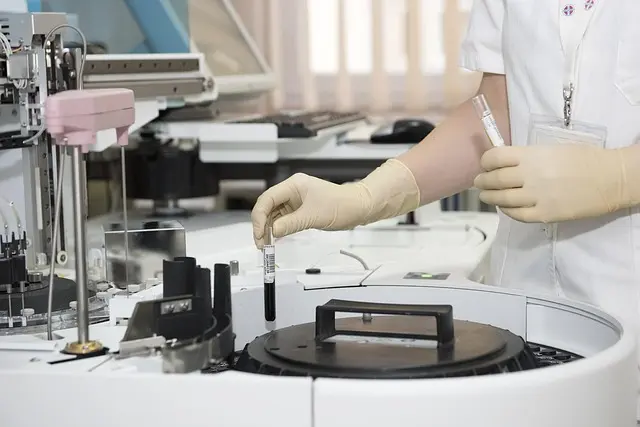
With continuous improvements in robotic technologies, laboratories in 2026 are increasingly utilizing automated systems for various tasks. Advanced robotics are expediting routine processes such as sample preparation, experiment execution, and data collection. This automation not only cuts labor costs but also increases accuracy and efficiency in experimental settings.
For example, the Molecular Robotics Consortium has introduced platforms capable of simultaneously running hundreds of experiments, which was unimaginable a decade ago. This shift allows scientists to rapidly test hypotheses and iterate on experimental designs based on real-time feedback. As a result, robotics in laboratories are significantly accelerating the pace of scientific discovery across diverse fields.
Statistical projections indicate that by 2026, laboratories equipped with advanced robotics could reduce experiment turnaround times by up to 60%, enabling quicker directional changes in research focus when results suggest new pathways for exploration.
Quantum Computing in Scientific Modeling
As we step into 2026, quantum computing is beginning to play an influential role in scientific modeling. Traditional computers face limitations in simulating complex molecular interactions, a critical hurdle for significant advances in chemistry and materials science. However, the unique capabilities of quantum computers offer resolution to these issues, allowing researchers to model and simulate complex systems with unprecedented accuracy.
Recent studies reported that quantum computing can potentially increase the efficiency of computational models by several orders of magnitude compared to classical computing methods. Companies like Google and IBM are investing heavily in quantum technologies and their applications in materials discovery, enabling breakthroughs in chemical synthesis that could lead to next-generation materials.
The intersection of quantum physics and material science holds the promise of transforming industries ranging from pharmaceuticals to energy. As quantum systems become more viable, the implications for scientific research are bound to be revolutionary, impacting everything from drug development to sustainable energy solutions.
Glossary
| Terme | Définition |
|---|---|
| CRISPR | Technique d’édition génique qui permet de modifier rapidement l’ADN. |
| Open Science | Pratique de recherche ouverte et collaborative pour partager les résultats. |
| Quantum Computing | Technologie de calcul basée sur les principes de la mécanique quantique. |
Checklist before incorporating new innovations
- [ ] Research the types of AI tools available for data analysis
- [ ] Evaluate the need for CRISPR techniques in your research
- [ ] Join open science platforms for better collaboration
- [ ] Explore automation tools for lab processes
- [ ] Investigate potential applications of quantum computing in your field
📺 For further insights: Explore the applications of AI in scientific research, an in-depth analysis available on YouTube:
applications of AI in scientific research 2026.
📺 Pour aller plus loin : applications of AI in scientific research 2026 sur YouTube